★ Service
Security camera systems for Chicago businesses and HOA buildings
We handle security camera installation in Chicago — storefronts, offices, restaurants, condo and HOA buildings — plus the North Shore and the O'Hare corridor when the project makes sense. If you have been comparing surveillance cameras in Chicago and keep getting vague quotes, we would rather walk the property and give you a real number.
One thing many installers will not tell you: a full rip-out is often unnecessary. Existing network cable, and even old analog coax, can usually be reused — that is frequently the difference between a reasonable upgrade and a painful one. More on that below.
Typical projects we handle
- Condo/HOA buildings covering entries, garages, mail rooms and common areas.
- Retail, restaurants and offices needing clear entry and register views.
- Single-family homes with doors, driveway, yard and perimeter coverage.
- Takeovers where cameras record poorly, drop offline or fail at night.
- Old analog CCTV systems upgraded to high-resolution video without rewiring.
What is included in our camera system work
- Site visit and camera layout based on real risks, not generic packages.
- Camera, lens and night-view selection matched to distance and lighting.
- NVR, server or cloud video design sized for retention and remote access needs.
- PoE switching, power planning and labeled cabling — the same gear we list in our networking catalog.
- User setup, mobile app access and handoff training after installation.
Cameras we actually put on walls
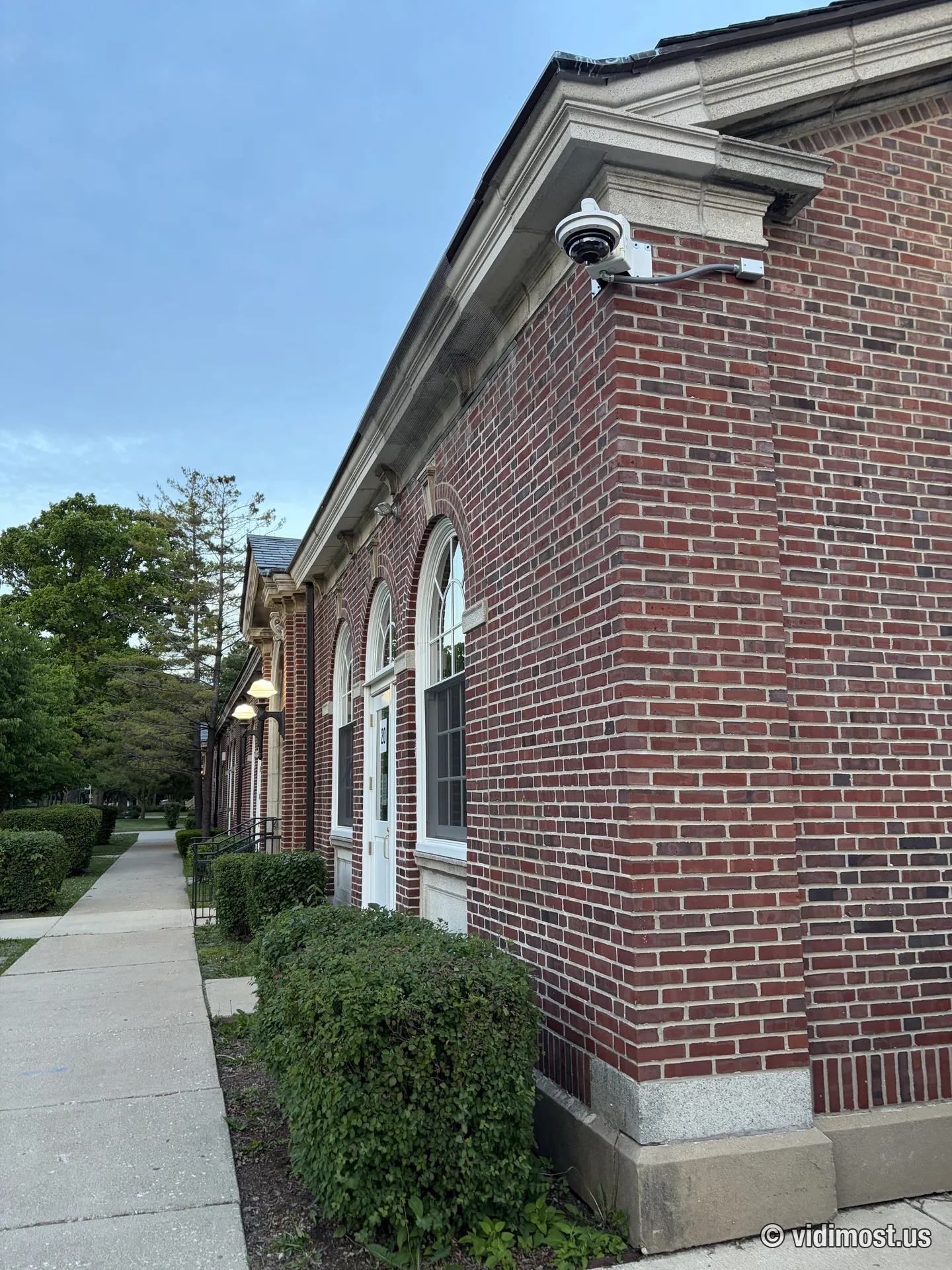
We are not tied to one vendor, but most Chicago projects end up with a short list. For hallways and entries in condo buildings it is usually a compact vandal dome like the Hanwha ANV-L6012R or its 4MP sibling ANV-L7082R; for parking and wide lots a multisensor such as the Axis P3737-PLE replaces three or four separate cameras. Recording typically lands on a Wisenet ARN series NVR. The full list with photos, specs and MSRP is in the security camera catalog.
Common camera system goals
- Identify visitors and vehicles at entries and driveways.
- Document package deliveries and common-area activity.
- Reliable playback and searchable timelines when an incident happens.
- Secure remote access for owners and property managers.
See example layouts in our Solutions section or browse the camera catalog.
Schedule a site visitHow we lay out cameras in a condo or HOA building
Most multifamily boards ask the same question: how many cameras do we actually need, and where? The pattern we install across Chicago is fairly consistent. The building entrance and lobby come first, then every entry and exit, gates, and the street parking along the property.
Garages are where budgets get wasted, so we keep it honest: in an underground or multi-level garage we cover the entries, the exits and the drive lanes — usually one or two cameras per level. That is enough to record who drove in, where they went and when they left. Trying to see every parked bumper is a camera count that nobody wants to pay for, and it rarely helps an investigation more than clean lane coverage does.
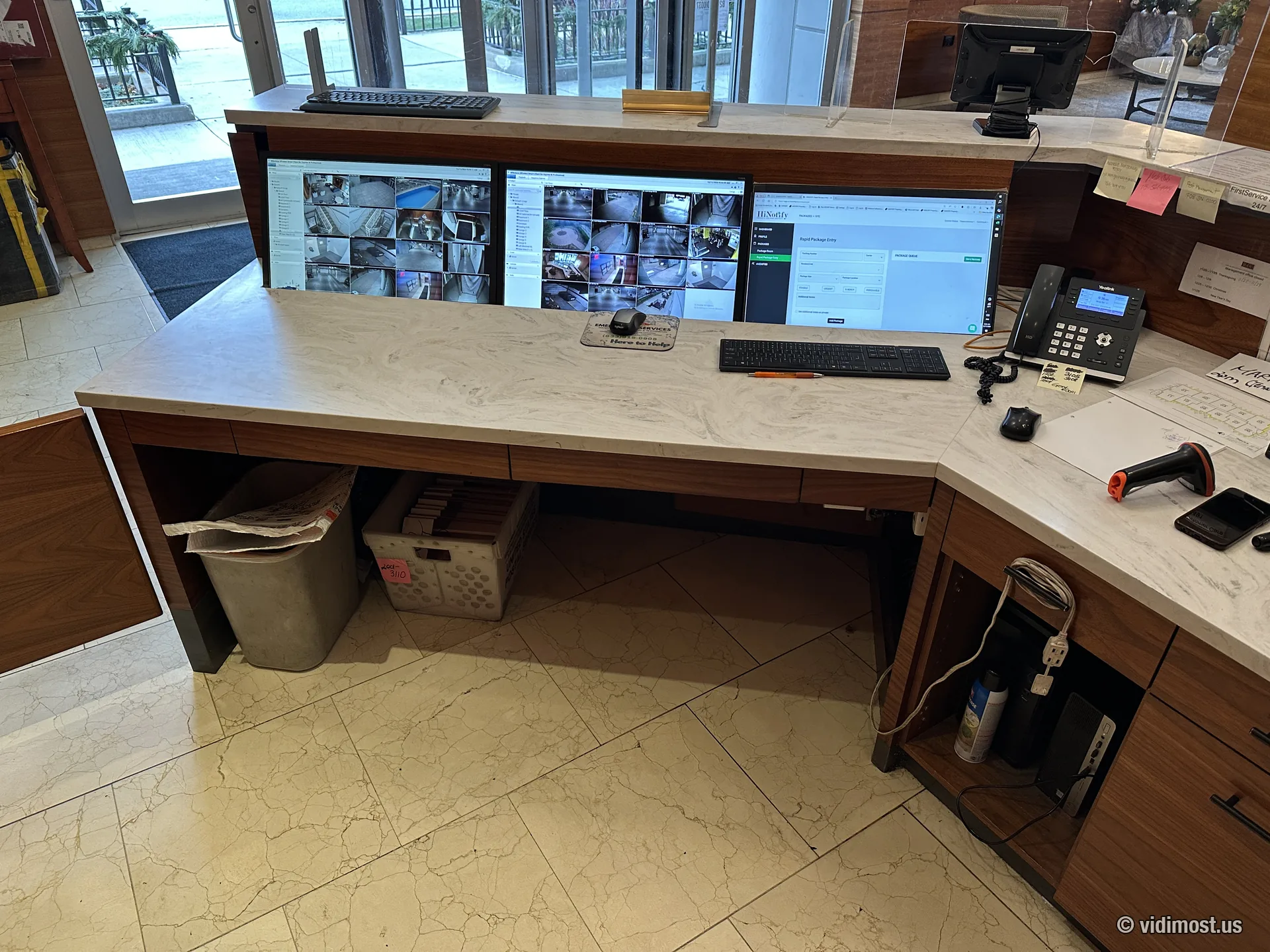
Then the amenity spaces: the party room, a few cameras around the pool, the gym and fitness areas, trash rooms, and the package area — one wide view of the whole room plus a tighter view of the shelves where things actually go missing. If the building has a front desk, we set up a PC there so staff can watch the whole perimeter live without logging into anything complicated.
For sizing: 16–32 cameras covers a typical Chicago multifamily building at a solid base level. Larger properties with grounds and multiple entrances scale well past that — our biggest HOA system runs 130 cameras on one platform. Access control usually goes in with the cameras; here is what that looks like in the same buildings.
Upgrading an existing system without pulling new wire
This is where most of the savings hide. Before we quote anything, we look at what is already in the walls. Cat5e and Cat6 runs that fed an old IP system almost always carry modern PoE cameras just fine. Labeled, tested, reused.
Coax is the more interesting case. Buildings all over Chicago still have RG59 from analog CCTV installed in the 90s and 2000s, and pulling it out of finished walls and ceilings is exactly the expensive part everyone wants to avoid. The good news: that coax can stay. We replace the old analog cameras with current high-resolution models and bring the video into a modern recording platform using encoders — devices like the Hanwha SPE-1630 16-channel encoder digitize the existing camera runs so they show up next to new IP cameras in one system. We usually run this on Wisenet WAVE, where each camera takes a WAVE Pro recording license; other encoder options are in the encoder section on vidimost.us, our equipment supply side.
In practice a 16-camera analog building often upgrades for roughly the cost of the cameras and one encoder, instead of a full rewiring project with drywall repair on top. Playback, mobile access and search work the same as on a new IP system. And when the budget allows later, individual runs can be migrated to IP one at a time — the WAVE system does not care which side of the encoder a camera lives on.
Repair and service calls
Cameras offline after a power outage, night image gone milky, recorder that stopped writing — these are weekly calls for us. If the system was installed by someone else, that is fine; we take over existing systems all the time. Describe the problem on the service and repair page and attach a photo of the rack if you can. New clients get 50% off the first service visit.
Cameras rarely live alone: they share the network with video intercoms and access control, and depend on the switching and Wi-Fi underneath. We design them as one system, which is usually why our takeover audits find capacity problems before they become outages.